
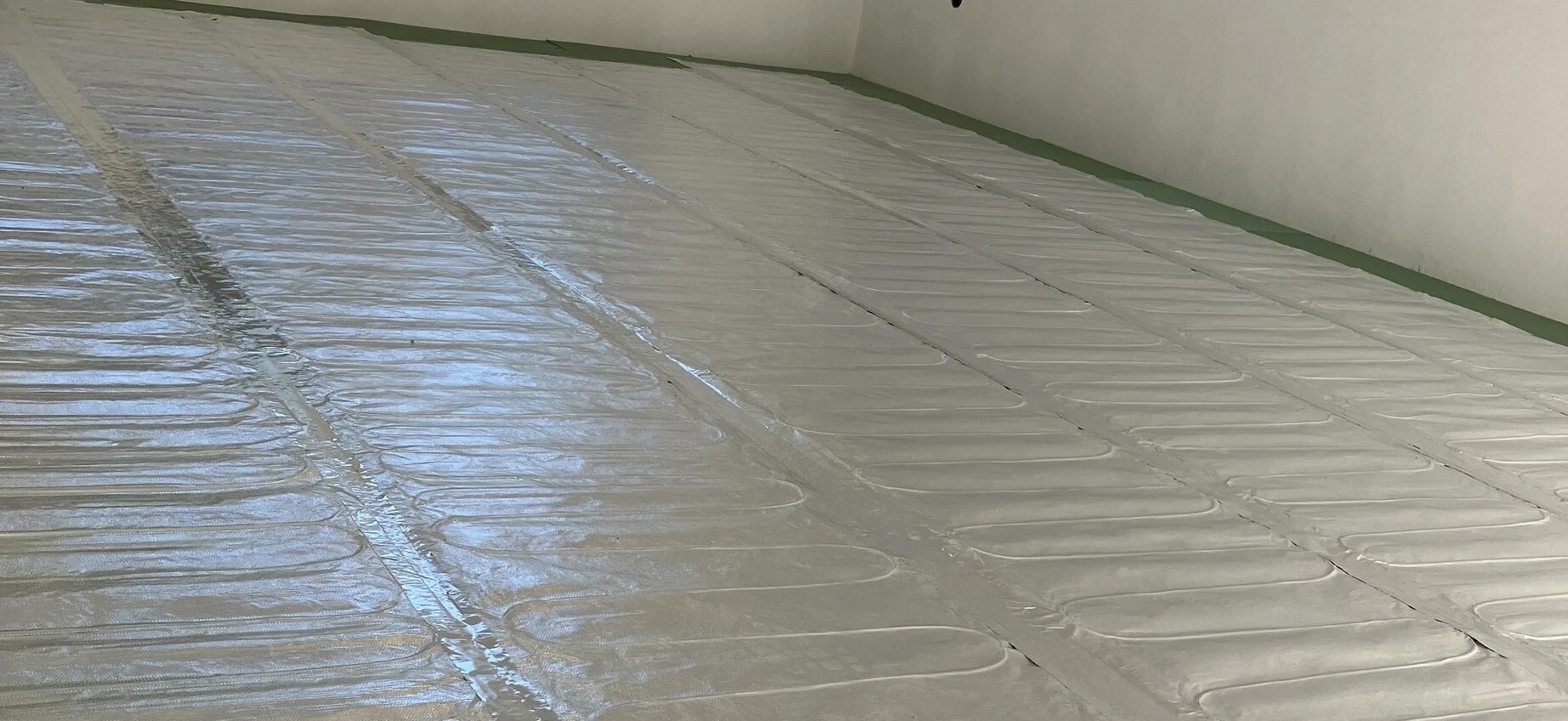
Install Foil Underfloor Heating Yourself (Step-by-Step Guide)
Folievloerverwarming is een van de makkelijkste manieren om een ruimte te voorzien van vloerverwarming. De installatie is droog, snel en goed te doen zonder professionele hulp. Volg de stappen hieronder voor een correct en efficiënt werkend systeem.
What Do You Need?
-
Heating foil (sized appropriately for the room)
-
Insulating underlay (minimum 7 mm, leveling type)
-
Aluminum foil tape
-
Multimeter
-
Thermostat
-
Qualified electrician for the final electrical connection
Step 1: Plan and Design
Determine which rooms you want to heat and where the thermostat will be installed. Then verify that you have the correct dimensions and specifications for the heating foil in each room.
Good planning prevents ordering too much or too little foil.
Step 2: Prepare the Floor
Clean the floor thoroughly and ensure it is level and free from imperfections. Remove any existing floor coverings if necessary.
A flat subfloor is essential for a successful installation. Uneven surfaces can cause damage to the heating foil over time.
Step 3: Install the Underlay
Install an insulating underlay to minimize downward heat loss. This is not an optional step. Without proper insulation, the heating foil will warm the floor structure rather than the room itself.
[products=groene_isolatieplaat]
The underlay must provide at least 1.5 mm of leveling capability to create a stable and even surface. We typically use a 7 mm thick underlay, which is standard for this type of system.
Choose an underlay that is suitable for underfloor heating and offers sufficient leveling properties.
Step 4: Install the Heating Foil
Measure the resistance value of the heating foil and record it.
Next, roll out the heating foil according to the manufacturer's instructions. Ensure the foil lies flat and does not overlap anywhere.
Overlapping foil can cause localized overheating, potentially damaging the system and creating a safety hazard.
Cutting the Foil to Size
If you need to adapt the foil to fit the room, follow these practical steps:
Cut
Carefully cut the heating foil along the designated cutting lines.
Fold
Fold the foil so it can be laid in the required direction.
Seal
Seal the joint carefully using aluminum foil tape to create a secure and safe finish.
[products=blog_soorten_foliesystemen]
Step 5: Electrical Connection
Connect the heating foil to the electrical supply according to the manufacturer's instructions.
This step must be carried out by a qualified electrician.
While laying the foil itself is a DIY-friendly task, the electrical connection is not.
Step 6: Test the System
Test the heating system before installing the final floor covering.
Measure both the resistance and voltage using a multimeter, following the manufacturer's instructions.
If everything functions correctly, you can proceed to the final step.
Do not skip this stage. Any defect discovered now is relatively easy to fix. A defect hidden beneath a finished floor is much more difficult and costly to repair.
[products=handleiding_multimeter]
Step 7: Install the Floor Covering
Once the system has passed all tests, install the final floor covering.
Foil underfloor heating is suitable for:
-
Laminate flooring
-
Carpet
-
Vinyl flooring
-
Click-lock PVC flooring
Always verify that the chosen floor covering is approved for use with underfloor heating.
Important
In some cases, a heat-conductive underlay is required between the heating foil and the finished floor covering.
Refer to the flooring manufacturer's installation instructions for specific requirements.
Practical Installation Examples
1. Cut
Carefully cut the underfloor heating foil along the designated cutting lines.
2. Fold
Fold the foil so it can be positioned in the correct direction.
3. Seal
Seal the joint carefully with aluminum foil tape to create a strong and durable finish.
Frequently Asked Questions About Installing Foil Underfloor Heating
Can I Install Foil Underfloor Heating Myself?
Yes. Laying the heating foil itself is perfectly suitable as a DIY project.
However, the final electrical connection must always be completed by a qualified electrician.
Which Floor Coverings Are Suitable for Foil Underfloor Heating?
Laminate, vinyl, click-lock PVC, and carpet are generally suitable options.
Always check the flooring specifications to confirm compatibility with underfloor heating systems.
Why Is a Good Underlay So Important?
The underlay provides insulation and creates a level foundation.
Without adequate insulation, a significant portion of the heat will be lost into the floor structure rather than heating the room.
Can Heating Foil Overlap?
No.
Overlapping foil causes localized overheating and can damage the system.
Always cut the foil only along the designated cutting lines and seal any joints using aluminum foil tape.
Ready to Get Started?
Do you have all the necessary materials?
Browse our range of foil underfloor heating systems and choose the solution that best suits your room and floor type.


